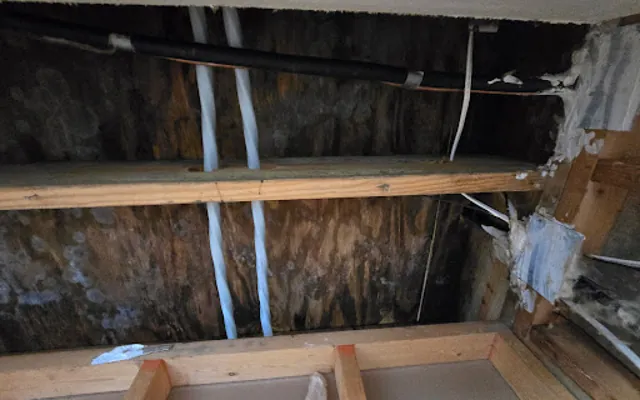
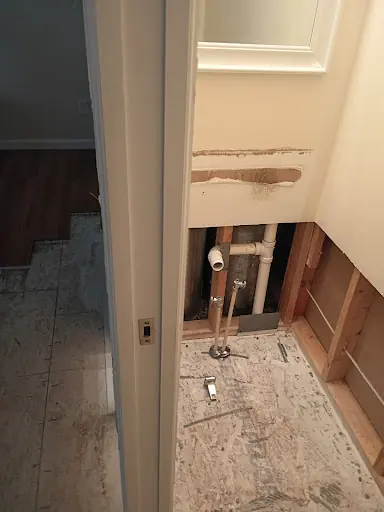
Winter atmospheric-river storms push rain sideways into aging Torrance roof flashing and tile, and once it gets past the underlayment it travels far from the actual entry point. Crews respond in about an hour with IICRC-standard drying to get ahead of it.

If rain is still falling crews contain the interior leak path and protect flooring and furniture while the roof issue itself gets addressed.
Crews check attic insulation, rafters, and ceiling drywall to map how far the water actually traveled from the entry point.
Saturated insulation and any drywall that has lost structural integrity gets removed so the remaining structure can dry properly.
Air movers and dehumidifiers run through attic and ceiling cavities with daily moisture checks until readings confirm the structure is dry.

While help is on the way, these first steps, done only where it is safe, limit the damage and protect the insurance claim.
Shut the supply off at the source, or close the home's main valve if the source is not obvious. Stopping the flow limits the damage more than anything else.
Switch off electricity to the affected area, but only if the breaker can be reached without standing in or touching the water.
Get a crew dispatched right away. The sooner extraction and drying begin, the more flooring, drywall, and belongings can be saved.
Take photos and a short video of the water and the affected rooms before anything is moved, so the insurance claim starts strong.
Roof leak water damage response in Torrance typically runs from several hundred dollars for a contained ceiling stain to a few thousand when attic insulation and drywall need removal and structural drying. Storm-related roof leaks are frequently covered by homeowners insurance, and crews provide the documentation adjusters usually ask for to support the claim.
Crews reach Torrance and the South Bay fast, from Old Torrance and West Torrance to Walteria, Hollywood Riviera, and nearby Redondo Beach and Carson. See the full list on the areas served across Torrance page.
See all areas servedEvery loss is photographed, measured, and logged from the first visit, so the paperwork holds up with your insurance carrier.
Technicians follow recognized IICRC drying standards and prove the work with daily moisture readings, not guesswork.
Emergency dispatch any hour of the day or night, with a real crew on the way, not a callback in the morning.
A real crew dispatched any hour, not a callback in the morning.
Trained technicians following recognized IICRC drying standards.
Truck-mounted, portable, and submersible for any size loss.
The loss is documented and billed to the carrier directly.
A roof leak usually appears or worsens during or right after rain, while condensation shows up in more consistent patterns tied to HVAC cycles. Crews check both attic insulation and ductwork to tell the difference before starting drying work.
Crews handle the interior water damage, drying, and documentation. For the actual roof repair crews coordinate with a roofing contractor so the leak source gets fixed while crews dry the structure.
Fast, thorough drying within the first day or two greatly reduces mold risk. That is why crews prioritize attic and ceiling cavity drying immediately rather than waiting for a full roof assessment first.
Most homeowners policies cover sudden storm-related roof leaks, though coverage details vary by carrier and policy. Crews document the storm date, entry point, and extent of damage to support your claim.
Water often runs several feet along rafters or sheathing before dripping through the ceiling, so the stain you see rarely sits directly under the actual entry point. That is why crews inspect the full attic cavity, not just the visible spot.
Torrance crews are on call 24 hours a day, local and fast, and can be on the way within the hour.
Call (424) 370-1501